
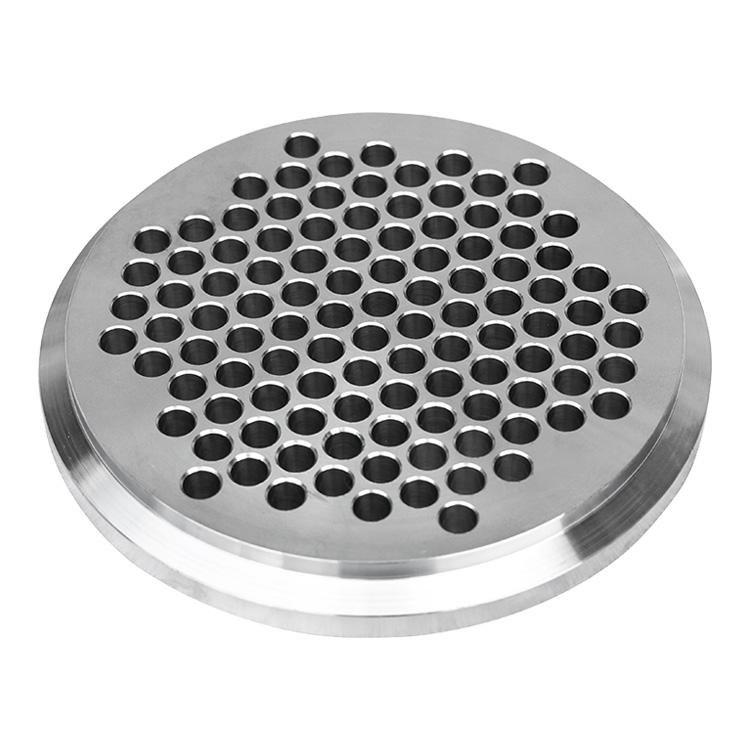
A carbon steel neck flange for pressure vessel systems is a critical connection component used to join pipes, nozzles, manways, and other pressure-retaining parts in demanding industrial applications. Designed for strength, durability, and reliable sealing, this type of flange is widely used in pressure vessels, boilers, heat exchangers, storage tanks, and process equipment where safe pressure containment is essential. Because pressure vessel systems often operate under elevated pressure, temperature, and mechanical stress, the choice of flange material and flange design directly affects performance, safety, and service life.
Carbon steel neck flanges are valued for their excellent mechanical properties, cost efficiency, weldability, and compatibility with many industrial service conditions. In pressure vessel systems, they are commonly selected for welded connections that require stable load transfer and dependable sealing. Their necked design helps reduce stress concentration at the weld area, making them especially suitable for high-pressure and high-temperature environments. For engineers, buyers, fabricators, and specifiers, understanding the structure, benefits, specifications, and selection criteria of a carbon steel neck flange is essential for achieving long-term system reliability.
A carbon steel neck flange is a welded flange with a tapered hub, also called a neck, that gradually transitions from the flange face to the pipe or nozzle. This geometry improves stress distribution and supports stronger welded joints compared with flat or slip-on flange styles. In pressure vessel systems, the neck flange is typically used where structural integrity, pressure resistance, and fatigue performance are important.
The term carbon steel neck flange generally refers to a flange manufactured from carbon steel grades that provide balanced strength and toughness. The flange is usually welded to a matching pipe or nozzle using a butt-weld connection. This construction is widely accepted in pressure vessel engineering because it offers excellent performance under cyclic loading, pressure fluctuations, and thermal expansion conditions.
In practical use, carbon steel neck flanges are chosen when the system requires:
Carbon steel remains one of the most widely used materials for pressure vessel flange applications because it offers an excellent balance of strength, machinability, availability, and cost. When compared with many alloy or stainless steel options, carbon steel provides a practical solution for a large number of standard industrial environments.
In pressure vessel systems, material selection is not only about pressure rating. It also involves temperature limits, fabrication requirements, corrosion exposure, welding procedures, inspection standards, and lifecycle cost. Carbon steel performs well in many non-corrosive or moderately corrosive environments and can be manufactured in a wide range of flange sizes and pressure classes.
The material is also easy to weld, which is important for pressure vessel nozzles and piping connections. A well-designed carbon steel neck flange can maintain integrity under repeated stress cycles, making it suitable for many process industries, energy systems, water treatment facilities, and industrial equipment packages.
| Advantage | Description | Why It Matters in Pressure Vessel Systems |
|---|---|---|
| High strength | Carbon steel provides strong mechanical performance under load | Supports safe operation in pressurized equipment |
| Excellent weldability | Suitable for butt-weld connections to pipes and nozzles | Improves joint integrity and fabrication efficiency |
| Stress reduction | Necked design helps distribute stress smoothly | Improves fatigue resistance and long-term reliability |
| Cost efficiency | More economical than many specialty alloys | Helps control project and maintenance costs |
| Wide availability | Commonly available in multiple sizes and standards | Supports faster procurement and easier system design |
| Good fabrication performance | Easy to machine, cut, and weld in workshops | Simplifies vessel manufacturing and assembly |
| Reliable sealing | Works with appropriate gaskets and bolt loads | Helps maintain leak-tight pressure vessel joints |
Carbon steel neck flanges are used across a broad range of pressure vessel systems and industrial equipment. Their role is to provide a secure, inspectable, and mechanically sound connection point that can endure pressure, vibration, and thermal variation.
In these applications, the carbon steel neck flange often serves as a transition between the pressure vessel shell and connected piping or accessory equipment. It must resist internal pressure, external loads, thermal expansion, and repeated mechanical stresses over the service life of the system.
A carbon steel neck flange has several important design elements that contribute to its performance in pressure vessel systems. These features are not only structural; they also influence sealing quality, welding performance, and load distribution.
| Component | Function | Design Importance |
|---|---|---|
| Flange face | Provides the sealing surface for the gasket | Affects leak resistance and joint reliability |
| Bolt holes | Allow bolting to a matching flange | Ensures proper clamping force and alignment |
| Hub or neck | Transitions from flange thickness to pipe wall | Reduces stress concentration near the weld |
| Weld end | Connects to pipe or nozzle by butt welding | Creates a strong permanent joint |
| Outer diameter | Determines fit and bolt circle geometry | Important for installation and compatibility |
| Thickness | Influences pressure resistance and stiffness | Supports the required pressure class |
| Raised face or other facing | Improves gasket sealing in many designs | Enhances joint performance under pressure |
There are several flange configurations commonly associated with pressure vessel systems. While the term “neck flange” often refers to a weld neck flange, it is useful to understand the broader context of pressure vessel flange design.
For pressure vessel systems, weld neck flanges are often preferred because their geometry is suitable for high-stress service and provides better load transfer than many alternative flange styles. They are especially useful where long-term structural performance is a priority.
The exact material properties of a carbon steel neck flange depend on the grade used, the manufacturing process, and any heat treatment applied. However, carbon steel flange materials generally offer the following characteristics:
| Property | Typical Performance | Relevance |
|---|---|---|
| Tensile strength | Moderate to high | Supports pressure containment and mechanical loading |
| Yield strength | Good structural resistance | Helps maintain flange shape under bolt load |
| Weldability | Excellent in many grades | Important for vessel fabrication and repair |
| Machinability | Good | Supports accurate facing and drilling |
| Impact resistance | Depends on grade and temperature | Relevant for low-temperature service |
| Corrosion resistance | Basic to moderate | May require coating or protection in aggressive environments |
Different carbon steel grades may be used depending on the pressure vessel specification, design code, and operating environment. The most suitable grade should always be selected based on the required mechanical properties and applicable standards.
| Grade Category | General Use | Typical Notes |
|---|---|---|
| ASTM A105 | Forged carbon steel for ambient and high-temperature service | Widely used for pressure-related flange applications |
| ASTM A350 LF2 | Low-temperature carbon steel service | Common where impact toughness is important |
| ASTM A516-related vessel material | Pressure vessel plate material used in vessel fabrication | May be used in associated vessel components depending on design |
| ASTM A694 / high-strength carbon steel grades | High-pressure and demanding service conditions | Selected for stronger pressure-retaining requirements |
The final grade choice depends on code compliance, design pressure, temperature range, corrosion allowance, weld procedure requirements, and procurement standards.
Carbon steel neck flanges used in pressure vessel systems are commonly manufactured in accordance with recognized international standards. Standards help ensure dimensional consistency, pressure rating reliability, material traceability, and compatibility between connected parts.
| Standard / Code | Scope | Typical Relevance |
|---|---|---|
| ASME B16.5 | Pipe flanges and flanged fittings | Common for standard flange dimensions and pressure classes |
| ASME B16.47 | Large diameter flanges | Used for larger pipe and vessel connections |
| ASME Section VIII | Pressure vessel design and fabrication | Relevant for vessel nozzle and joint design requirements |
| EN / DIN flange standards | Metric and European flange systems | Used in many international projects |
| ISO-related specifications | Global standardization references | Supports compatibility and procurement consistency |
When selecting a carbon steel neck flange for a pressure vessel system, it is essential to confirm the applicable code, pressure class, temperature rating, and material certification requirements. Matching the flange to the correct standard helps avoid installation issues and supports safe operation.
Carbon steel neck flanges are available in multiple pressure classes and nominal sizes. The correct class depends on the design pressure, temperature, and code requirements of the system. Higher pressure classes generally indicate increased wall thickness, bolt load capability, and sealing performance.
| Pressure Class | Typical Use | General Note |
|---|---|---|
| 150 | Low to moderate pressure service | Common in general industrial piping and vessel auxiliaries |
| 300 | Moderate pressure service | Frequently used in process and pressure vessel systems |
| 600 | Higher pressure service | Improved strength and sealing for demanding applications |
| 900 | Severe pressure service | Used where stronger flange design is necessary |
| 1500 | Very high pressure service | Selected for specialized high-stress systems |
| 2500 | Extreme pressure service | Used in highly demanding engineered applications |
Size availability commonly ranges from small-diameter connections to very large vessel openings. Exact dimensions vary by standard, pressure class, and flange type.
| Specification Item | Typical Options / Values |
|---|---|
| Product | Carbon Steel Neck Flange for Pressure Vessel Systems |
| Flange type | Weld neck flange, long weld neck flange, custom nozzle flange |
| Material | Carbon steel, forged carbon steel, pressure vessel compatible grades |
| Pressure rating | Class 150, 300, 600, 900, 1500, 2500 or equivalent metric ratings |
| Size range | Small to large diameter, depending on project standard |
| Facing type | Raised face, flat face, ring type joint, or custom facing |
| Connection | Butt-weld |
| Application | Pressure vessels, boilers, tanks, heat exchangers, process systems |
| Standards | ASME, EN, DIN, ISO, project-specific codes |
| Inspection | Dimensional check, material verification, NDT as required, pressure code compliance |
Sealing performance is one of the most important considerations for any pressure vessel flange. A carbon steel neck flange must create a secure interface with the gasket and matching flange face to prevent leakage under pressure.
The quality of the seal depends on several factors:
In pressure vessel systems, common gasket choices include spiral wound gaskets, ring-type joints, and other engineered sealing solutions, depending on the flange type and service conditions. Carbon steel neck flanges are compatible with many sealing methods when designed and installed properly.
The manufacturing process of a carbon steel neck flange affects its dimensional accuracy, strength, and reliability. Typical production methods include forging, machining, heat treatment, and final inspection. Forged carbon steel flanges are often preferred for pressure vessel service because forging improves grain structure and mechanical consistency.
Important fabrication considerations include:
In vessel fabrication, a flange must not only meet dimensional requirements but also fit accurately with the nozzle reinforcement, piping spool, and gasketed joint. Small errors in machining or alignment can affect the sealing performance of the entire pressure vessel system.
Proper installation is essential for the performance of any carbon steel neck flange in a pressure vessel system. Even a high-quality flange can perform poorly if installed incorrectly. Best practices include careful alignment, controlled bolting, and verification of surface condition before assembly.
Good installation practices help maximize flange life, reduce leakage risk, and improve the overall safety of the pressure vessel system.
Quality control is especially important for pressure vessel flange applications because these components are part of a pressure-retaining system. Inspection may include visual examination, dimensional verification, material review, and testing according to the project specification.
| Inspection Item | Purpose |
|---|---|
| Visual inspection | Checks for surface defects, damage, or contamination |
| Dimensional inspection | Confirms bolt circle, thickness, bore, and face dimensions |
| Material verification | Ensures correct carbon steel grade and documentation |
| Weld inspection | Evaluates the quality of butt-weld joints |
| Non-destructive testing | Detects internal or surface defects when required |
| Pressure testing | Confirms overall system integrity after installation |
Carbon steel does not offer the same level of inherent corrosion resistance as stainless steel or some alloy materials. For that reason, corrosion management is important when using a carbon steel neck flange in pressure vessel systems.
Common corrosion-control methods include protective coatings, painting, cathodic protection in certain systems, controlled operating environments, and the use of corrosion allowance in design. In mild to moderate service conditions, carbon steel can provide excellent value and performance when appropriate protection strategies are used.
If the operating medium is corrosive, erosive, or exposed to moisture and chemicals, the flange material and surface protection must be reviewed carefully during design.
Selecting the right carbon steel neck flange for a pressure vessel system requires attention to multiple technical and operational factors. A good selection process improves safety, minimizes maintenance, and supports compliance with engineering standards.
In many projects, engineers choose weld neck flanges because they offer a strong, dependable connection that performs well under pressure vessel conditions. This makes them a practical default choice for critical joints.
Compared with other flange styles, a carbon steel neck flange offers notable advantages in pressure vessel systems. Slip-on flanges, threaded flanges, and some lap joint designs may be suitable for less demanding service, but they generally do not match the structural performance of a weld neck flange in severe conditions.
| Flange Type | Main Difference | Relative Suitability for Pressure Vessels |
|---|---|---|
| Weld neck flange | Tapered hub and butt-weld connection | Excellent for high-stress pressure vessel service |
| Slip-on flange | Pipe slips into the bore and is welded | Less favorable for high-stress vessel connections |
| Threaded flange | Connects by threads rather than welding | Not ideal for critical pressure vessel service |
| Socket weld flange | Smaller piping connection with socket joint | Used in limited small-bore applications |
| Lap joint flange | Used with a stub end for easier alignment | More suitable for non-critical or easy-disassembly service |
The neck flange’s structural advantages make it especially appropriate for vessels that operate under significant pressure and require dependable joint performance over time.
A carbon steel neck flange is used to create a strong welded connection in pressure vessel systems, piping systems, boilers, heat exchangers, and process equipment.
A weld neck flange is preferred because its tapered hub helps distribute stress evenly, improving strength, fatigue resistance, and sealing performance.
Yes, carbon steel is widely used in high-pressure applications when the correct grade, design code, and pressure class are selected.
Common standards include ASME B16.5, ASME B16.47, ASME Section VIII, and various EN or DIN flange standards depending on the project.
Common pressure classes include Class 150, 300, 600, 900, 1500, and 2500, though the correct choice depends on design requirements.
They can be used in some corrosive environments if protective measures are applied, but corrosion resistance should always be evaluated carefully.
A carbon steel neck flange for pressure vessel systems is a dependable and widely used connection solution for industrial equipment that must safely contain pressure. With its tapered hub, welded construction, and strong mechanical performance, it offers excellent stress distribution and sealing reliability. Carbon steel remains a practical material choice because it combines strength, weldability, availability, and cost efficiency.
For pressure vessel design, fabrication, and maintenance, selecting the right carbon steel neck flange means considering material grade, pressure rating, flange standard, temperature range, gasket compatibility, and inspection requirements. When properly specified and installed, this flange type supports safe operation, long service life, and reliable performance in demanding process environments.
Whether used in boilers, tanks, heat exchangers, reactors, or industrial piping connected to pressure vessels, the carbon steel neck flange remains a fundamental component in modern pressure-retaining systems.
```


Copyright © 2022 Zhejiang Songlin Flange Co., Ltd.
SitemapDeze website maakt gebruik van cookies om ervoor te zorgen dat u de beste ervaring op onze website krijgt.

 English
 Español
 Pусский
 Français
 Deutsch
 日本語
日本語 한국어
한국어 العربية
 Italiano



 WhatsApp
 Telefoon
Opmerking
(0)